
Cut Your Winter Pool Power Bill with a Variable-Speed Pool Pump
Pool Equipment
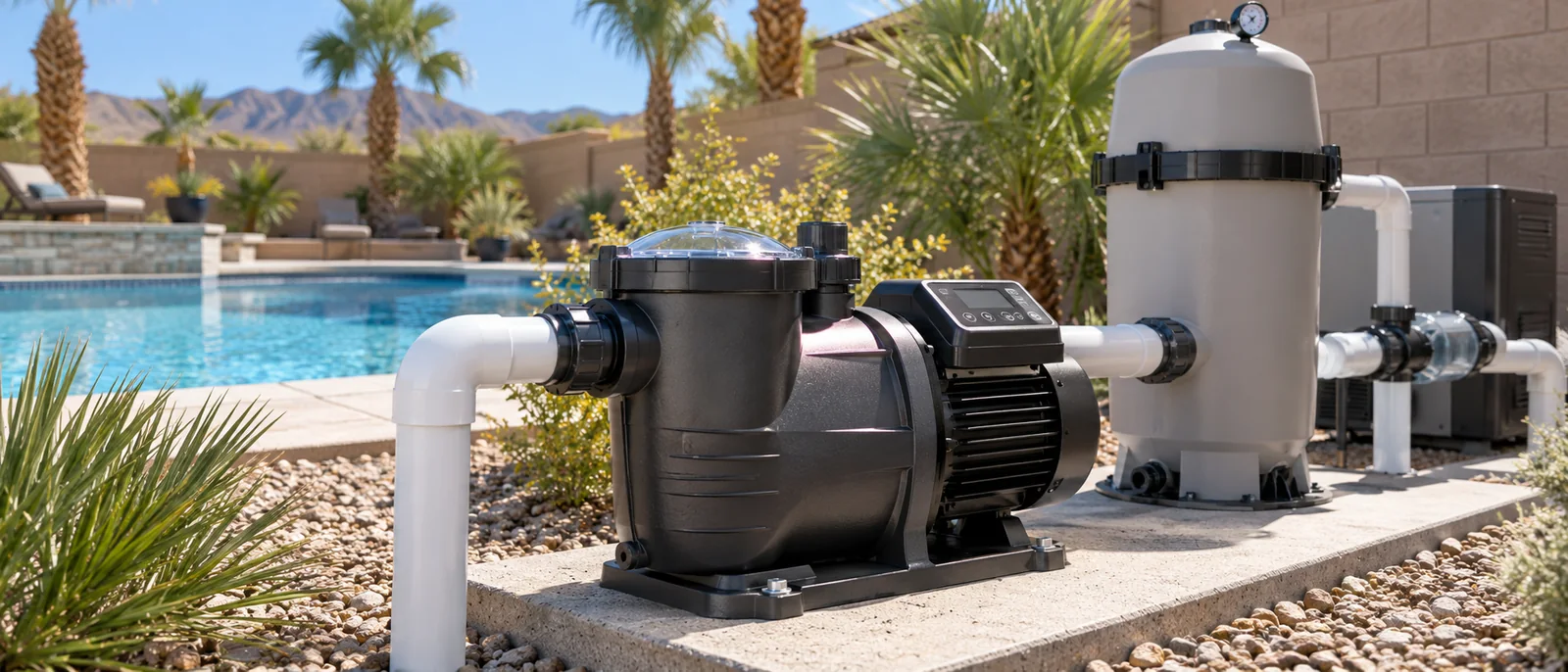
Key highlights
- Running a pool pump at half speed uses about one-eighth the power (ENERGY STAR).
- In our Las Vegas example, an old single-speed pool pump costs about $58 a month to run in summer. A variable-speed pool pump does the same job for about $18.
- Winter is the easiest time to save: cooler water needs fewer hours, and low speed handles most of them.
- Your pool heater, cleaner and freeze protection each need a minimum speed. Set them up right and you save without problems.
After the air conditioner, the pool pump is often the biggest electricity user at a Las Vegas home. An older single-speed pool pump runs at full power every minute it’s on. A variable-speed pool pump can slow down, and that is where the savings come from.
November is a good month to look at this. The water is cooler, the pool needs fewer hours, and a variable-speed pool pump can do most of its work at low speed.
The pump affinity law: why slower is so much cheaper
Every pool pump follows three simple rules called the pump affinity laws. They describe what happens when you change how fast the motor spins. Here is each one at half speed:

-
Law 1 · Flow
50%
Flow follows speed
At half speed, the pool pump moves half the water.
-
Law 2 · Pressure
25%
Pressure follows speed squared
At half speed, it makes one-quarter the pressure.
-
Law 3 · Power
12.5%
Power follows speed cubed
At half speed, it uses about one-eighth the power.
The third law is the one that saves money. Power drops with the cube of the speed, so a small slowdown makes a big difference. Here’s what that looks like on a typical pool pump:
| Motor speed | Water moved | Pressure | Power used |
|---|---|---|---|
| 100% (about 3,450 RPM) | 100% | 100% | 100% |
| 75% (about 2,600 RPM) | 75% | 56% | 42% |
| 50% (about 1,725 RPM) | 50% | 25% | 12.5% |
Ideal numbers from the affinity laws. Real pool pumps come close but not exactly, because of plumbing, the pool filter and motor efficiency.
Real equipment proves it. The U.S. Department of Energy’s Building America program measured a pool pump slowed from 3,450 RPM to 2,400 RPM: power dropped from about 2,000 watts to about 600 watts. ENERGY STAR sums it up: half the speed, about one-eighth the energy.
There’s one catch. Because flow follows speed, half speed moves half as much water per hour. So the pool pump runs longer to filter the same water. It still wins by a mile: twice the hours at one-eighth the power is about one-quarter of the energy. Pool pros call it “run it slower and longer.”

Half the speed. One-eighth the power.
Twice the hours at half speed still uses about 75% less energy.
What it costs to run in Las Vegas
Here is an illustrative backyard-pool comparison using $0.12 per kWh. Your actual rate plan, fees, equipment and operating schedule may differ:
Old single-speed pool pump
Full power
- Summer month · 8 hrs a day
- $58
- Winter month · 6 hrs a day
- $43
About 2,000 watts every minute it runs.
Variable-speed pool pump
Example comparison
- Summer month · 12 hrs low + 2 hrs boost
- $18
- Winter month · 8 hrs low + 1 hr boost
- $11
About 250 watts at low speed, about 1,000 watts on boost.
Example only, at $0.12 per kWh. Your cost depends on your pool size, plumbing, pool filter, the speeds you need and your rate plan.
A starting schedule for summer and winter
Every pool is different, so treat this as a starting point. We set the final speeds and hours on site.
SummerJune – September
-
Filtering
10–12 hours at low speed
-
Skim / clean
1–2 hours at a higher speed
-
Pool heater
Rarely needed
-
Freeze guard
Off
WinterNovember – February
-
Filtering
6–8 hours at low speed
-
Skim / clean
About 1 hour at a higher speed
-
Pool heater
At or above its minimum flow speed
-
Freeze guard
On. Runs when air nears freezing
Pro tip
If your pool heater clicks but won’t fire when the pool pump is on low, the speed may be too low to close the pool heater’s water-pressure switch. That’s the affinity law again: half speed makes only one-quarter the pressure. Set a higher speed for heating, or let your pool automation system do it. More in our pool heater warning signs guide.
Don’t slow down too much
Low speed is where the savings are, but some jobs need more flow. We program each of these as its own step, so the pool pump only speeds up when it has to.
-
Pool heaters
Gas pool heaters and pool heat pumps need a minimum flow to run safely.
-
Pool cleaners
Pressure-side and suction cleaners need a higher speed to move.
-
Salt cells
Need enough flow for their flow switch to turn on.
-
Skimming
Pulls leaves better at a slightly higher speed during leaf drop.
-
Water features
Spillovers and fountains need their own speed to look right.
-
Pool filter
A clean pool filter lets you run lower and save more.
Still running a single-speed pool pump?
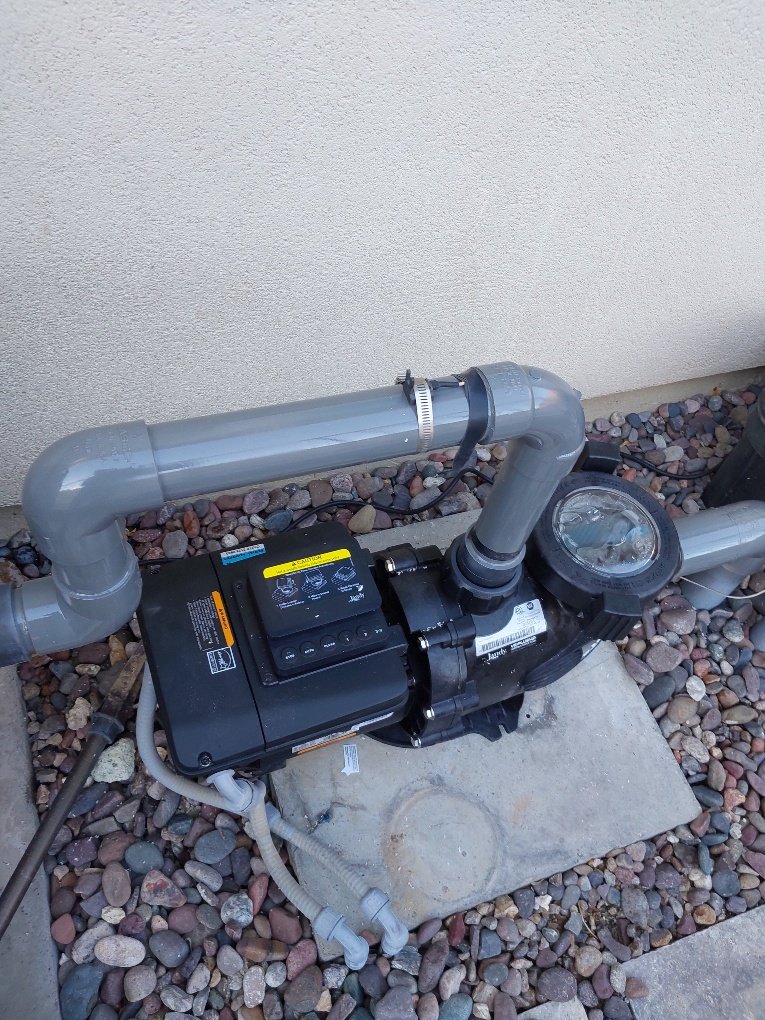
Fresh & Clear job
New variable-speed pool pump install
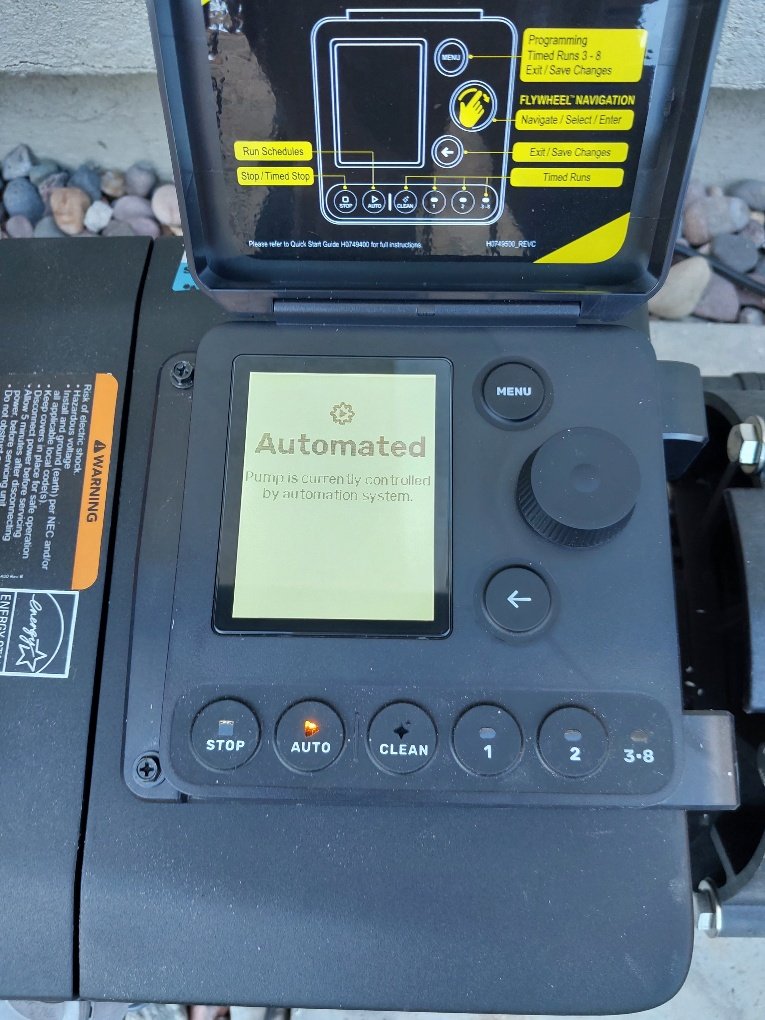
Fresh & Clear job
Pool pump keypad, run by automation
Since July 19, 2021, U.S. Department of Energy rules have required new pool pumps up to about 5 horsepower to meet a minimum efficiency. In practice, most replacement pool pumps today are variable-speed. If your single-speed pool pump is loud or leaking, compare repair and replacement options. Energy savings depend on the selected pool pump, its settings and your electricity rate. See our pool pump & filter repair services.
Newer variable-speed pool pumps we install
We install and service both major brands. Here are the newer models we recommend most often in the Las Vegas Valley. The right one depends on your pool size, plumbing, pool heater and any water features.
Pentair
Model example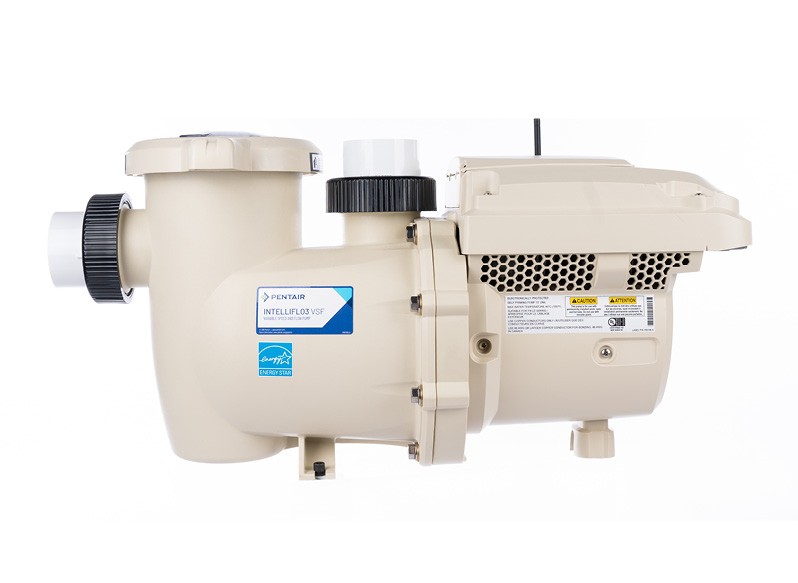
Pictured: Pentair IntelliFlo3 VSF variable-speed pool pump.
IntelliFlo3 VSF
A Pentair variable-speed and flow pool pump.
- Sizes
- 1.5 HP or 3.0 HP
- Power
- 115/230V (1.5 HP), 230V (3.0 HP)
- Efficiency
- WEF 9.4 (1.5 HP), 7.1 (3.0 HP). Up to 90% energy savings (manufacturer claim)
- Controls
- Built-in Wi-Fi and Pentair Pool app. Sensorless flow control holds your set flow rate
Best forOwners who want phone control and a pool pump that adjusts its own flow as the pool filter loads up.
Pentair
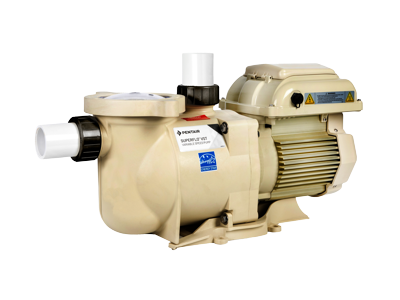
Pictured: Pentair SuperFlo VST variable-speed pool pump.
SuperFlo VST
A simple, affordable step up from a single-speed pool pump.
- Size
- 1.5 HP (2.2 THP)
- Power
- 115V or 230V; confirm electrical requirements for the exact model
- Efficiency
- WEF 9.0 (230V), 7.3 (115V). Up to 80% energy savings (manufacturer claim)
- Controls
- Keypad with 3 speeds and a 24-hour clock. Connects to automation
Best forSmaller pools and straightforward upgrades where you don’t need app control.
Hayward
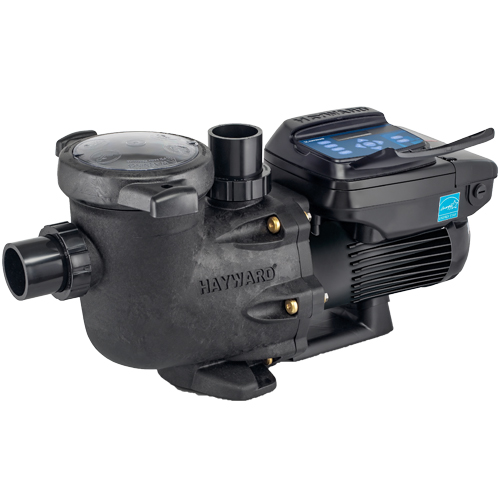
Pictured: Hayward TriStar VS 950.
TriStar VS 900 & 950
Hayward’s high-output variable-speed pool pumps.
- Sizes
- 1.85 HP (VS 900) or 2.7 HP (VS 950)
- Power
- 115/230V
- Speed range
- 600 to 3,450 RPM (VS 950)
- Controls
- Programmable keypad with up to 8 timer settings. Works on its own, with Hayward OmniHub, or other automation
- Warranty
- Confirm warranty terms for the exact model and installation
Best forLarger pools, spas, spillovers and water features. The VS 950 has the most output.
Hayward
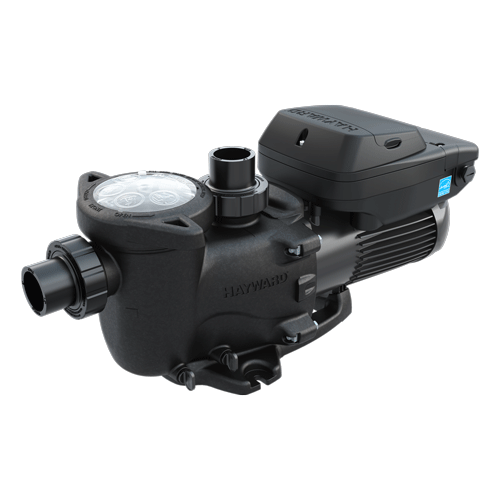
Pictured: Hayward MaxFlo VS 500 variable-speed pool pump.
MaxFlo VS 500
An easy upgrade for most in-ground pools.
- Size
- 1.65 HP
- Power
- 115/230V
- Efficiency
- WEF 10.7 (115V), 10.2 (230V). ENERGY STAR
- Controls
- Keypad turns four ways on the pool pump or mounts on a wall
Best forReplacing an older MaxFlo or a typical single-speed pool pump on an average backyard pool.
Hayward
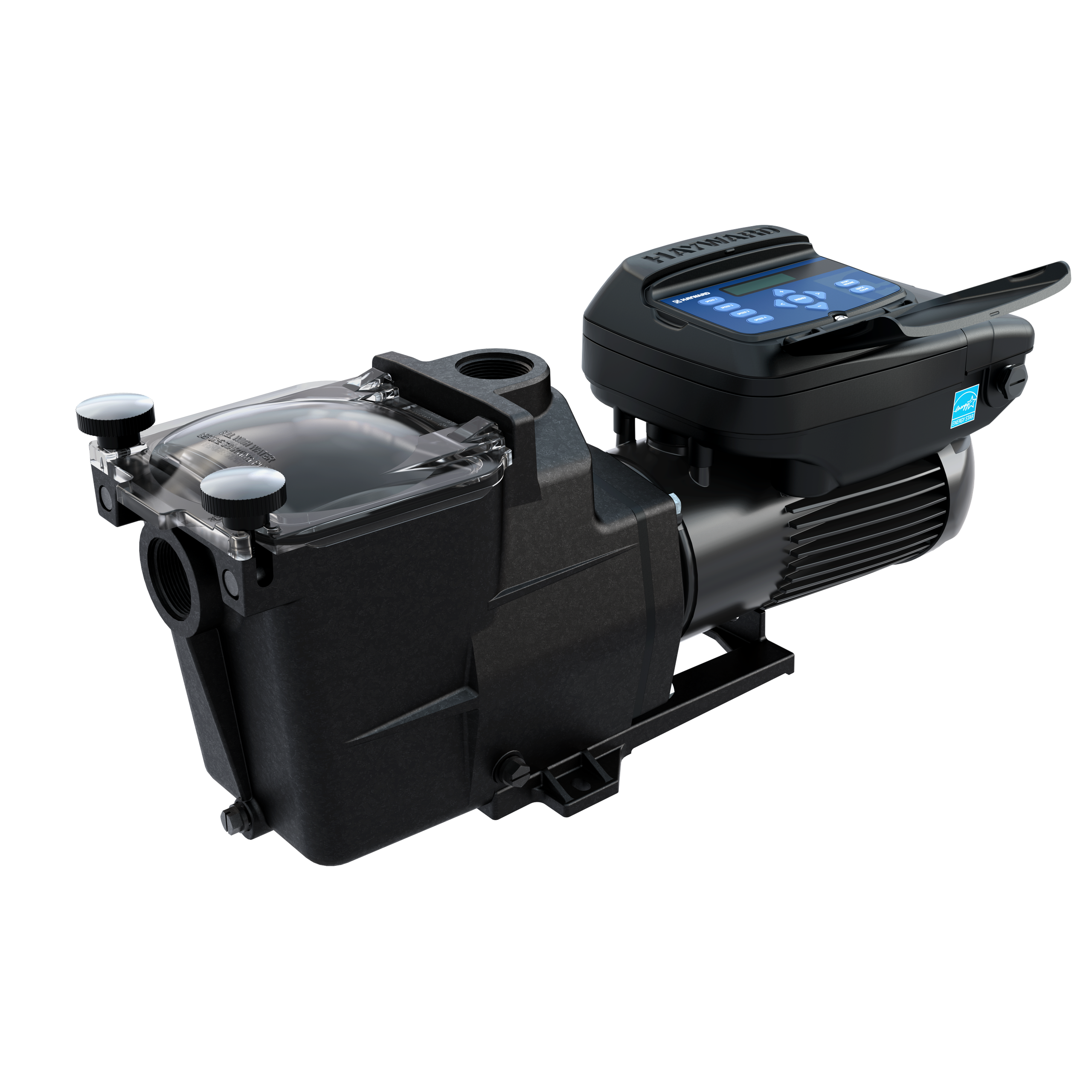
Pictured: Hayward Super Pump VS 700 variable-speed pool pump.
Super Pump VS 700
The variable-speed version of Hayward’s classic Super Pump.
- Size
- 1.65 HP
- Power
- 115/230V
- Efficiency
- WEF 8.6 / 11.7
- Controls
- Built-in LCD display with timers
- Warranty
- Confirm warranty terms for the exact model and installation
Best forDrop-in replacement where an older Hayward Super Pump already sits, with little or no plumbing change.
What is WEF?
Weighted Energy Factor is the Department of Energy’s efficiency score for pool pumps: gallons of water moved per kilowatt-hour. Higher is better. Compare it between pool pumps of the same size, because bigger pool pumps score lower.
Specs from Pentair and Hayward product pages, October 2026. Manufacturers update models and ratings, so we confirm the current model before we quote.
Daylight saving time ended November 1. If your pool pump still uses a mechanical timer, make sure it was reset, or it may be running during the wrong hours. See the rest of our fall pool care checklist.
Frequently asked questions
How much can a variable-speed pool pump save in Las Vegas?
In the illustrative $0.12-per-kWh example, the monthly comparison is about $58 versus $18 in summer and $43 versus $11 in winter. Actual cost depends on the pool pump, operating hours, flow requirements and your electricity rate.
How many hours should I run my pool pump in winter?
A common starting point is a longer low-speed run plus a short higher-speed run for skimming or the pool cleaner. Freeze protection should be on. We set the exact schedule for your pool.
Is it OK to run a variable-speed pool pump 24 hours a day?
Some pools run very long hours at a very low speed, and power use can still be low. But low speed must still be enough for your pool filter, salt cell and pool heater. We check flow before setting a 24-hour schedule.
Why won’t my pool heater turn on when the pool pump is on low?
A pool heater needs a minimum water flow to fire. If the pool pump speed is too low, the pool heater’s pressure switch stays open. Set a higher speed for heating, or let your automation system do it.
Do I have to replace my single-speed pool pump?
No. You can keep using it while it works. When it does need replacing, new pool pumps must meet U.S. Department of Energy efficiency rules, so most replacements are variable-speed.