
Why Fall and Winter Are the Best Time to Replaster Your Las Vegas Pool
Pool Repair
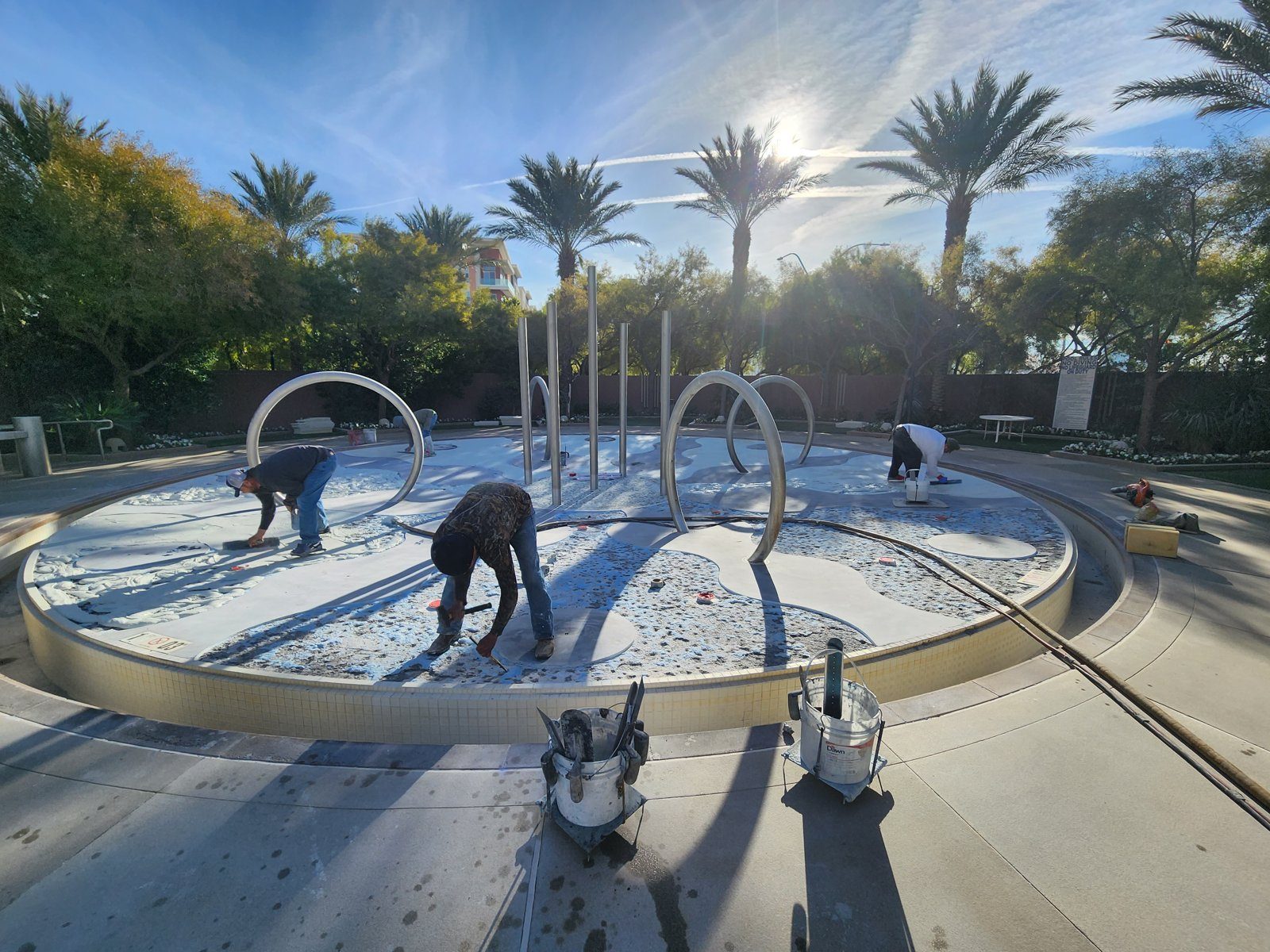
Key highlights
- Hot, dry weather can dry fresh plaster too fast, leaving a softer, weaker surface. Cooler months give it a slower, more even cure.
- New plaster needs a 28-day start-up with brushing twice a day. That’s easier in months you aren’t swimming.
- Rough spots, stains, etching and hollow-sounding areas are signs your plaster is wearing out.
- Planning in fall or winter leaves time for the work and start-up before swim season. We confirm timing after we inspect your pool.
If your pool’s surface is rough, stained or starting to flake, a replaster is in your future. When you do it matters. In Las Vegas, late fall and winter are the best months to replaster.
Why cooler weather helps new plaster
Pool plaster is a cement-based finish. It doesn’t just dry; it hardens through a chemical reaction with water. Industry testing reported in WaterShapes found that when fresh plaster dries out too fast in heat and low humidity, that reaction stops early. The result is a softer, weaker surface that loses calcium and gets more porous, so it stains and roughens sooner.
Summer replaster
100°F+ days
- Curing
- Fast
- Risk of weak, porous surface
- Higher
Crews fight the heat, and your pool is out of service in prime swim season.
Fall & winter replaster
Best season
- Curing
- Even
- Risk of weak, porous surface
- Lower
Cooler weather can make scheduling easier outside peak swim season; completion depends on the agreed scope and schedule.
General comparison. Every job also depends on the mix, the crew and a correct start-up.
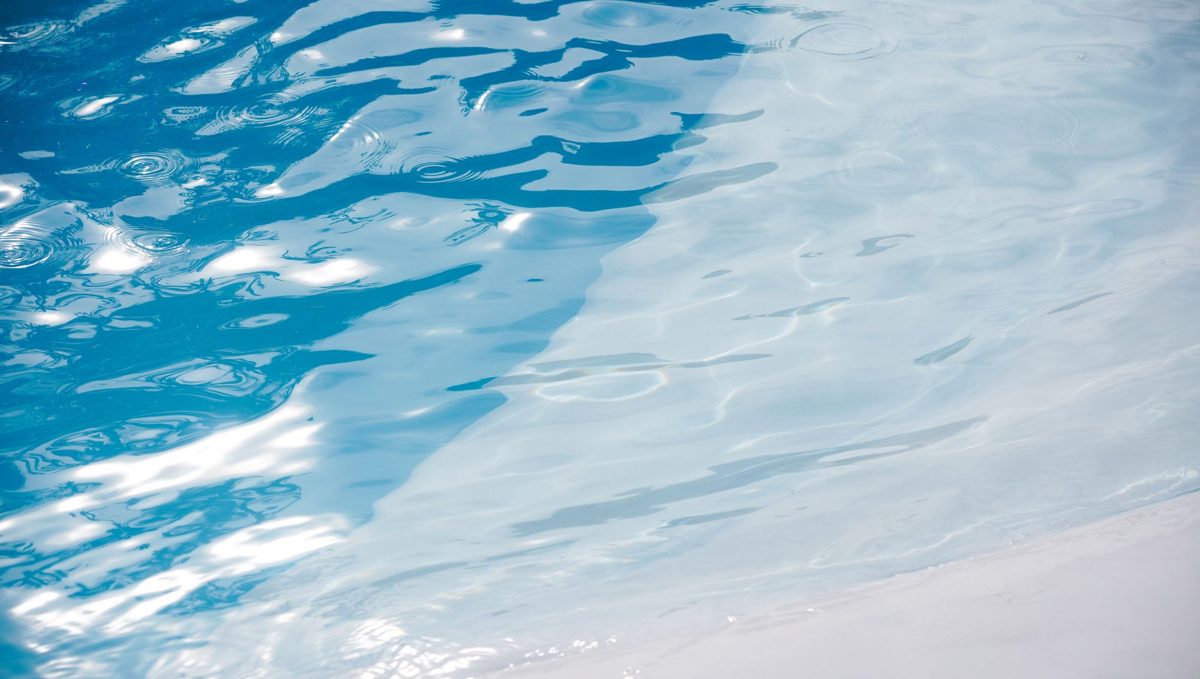
Cooler days. Stronger plaster.
Plan the work outside your main swimming season.
Signs you need a replaster
-
Rough to the touch
Scratches feet and snags swimsuits.
-
Stains that won’t clean
Dark spots, rust or mottled color.
-
Cracks or flaking
Bits of plaster coming loose, or hollow spots.
-
Etching and pitting
Often from water that ran too low in pH.
-
Base showing through
Thin spots on steps and the floor.
-
Tile or fittings failing
A good time to fix them while the pool is empty.
How a replaster works
-
Drain the right way
In Clark County, pool water goes to the sanitary sewer clean-out at a slow rate, never the street or a storm drain.
-
Prep the surface
Old plaster is chipped or ground so the new finish bonds, and loose areas are removed.
-
Fix while it’s empty
Tile, fittings, lights and suction outlets are repaired or upgraded now.
-
Apply the new finish
The crew applies and trowels the new plaster or NPT finish.
-
Fill without stopping
The pool is filled in one continuous run, with timing based on its size, water supply and finish instructions.
-
28-day start-up
Brush at least twice a day, balance the water step by step, and wait to use the pool heater, salt and automatic cleaners.
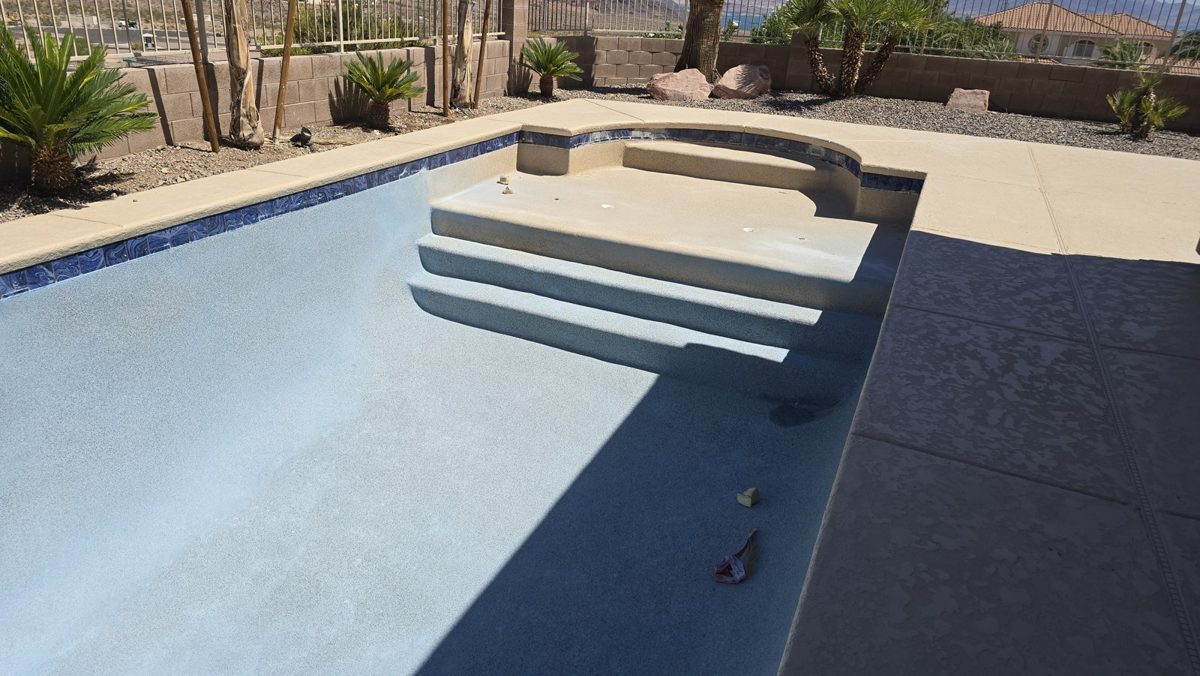
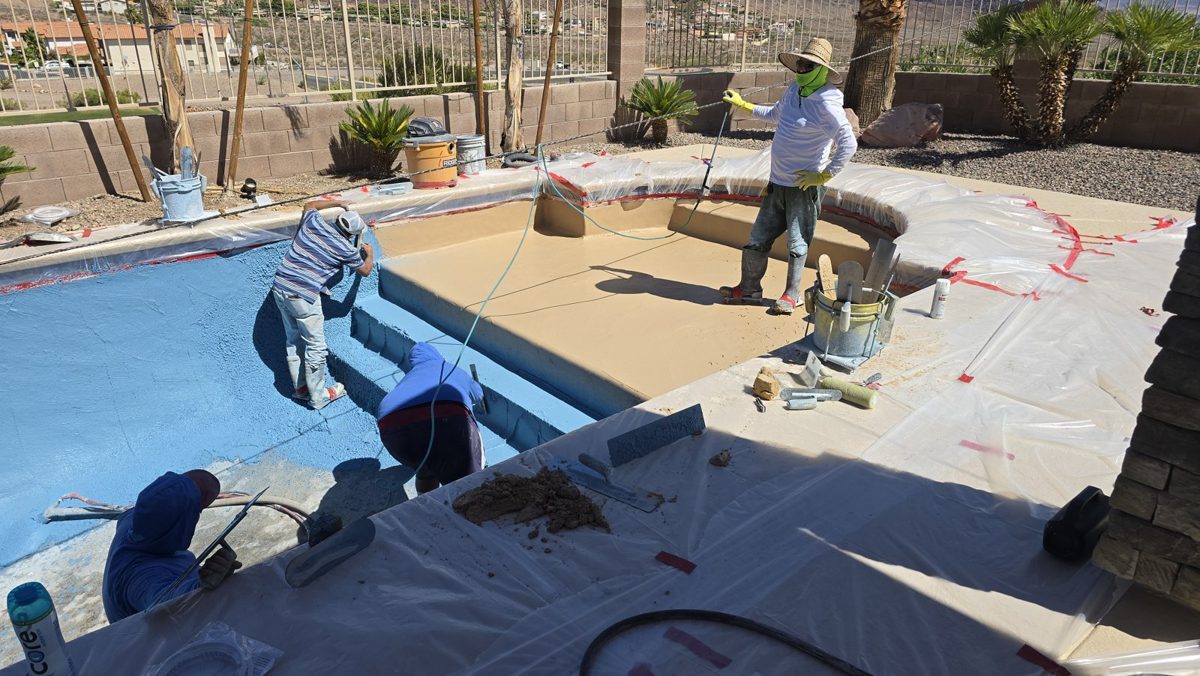
Fresh & Clear job
New plaster, ready to fill
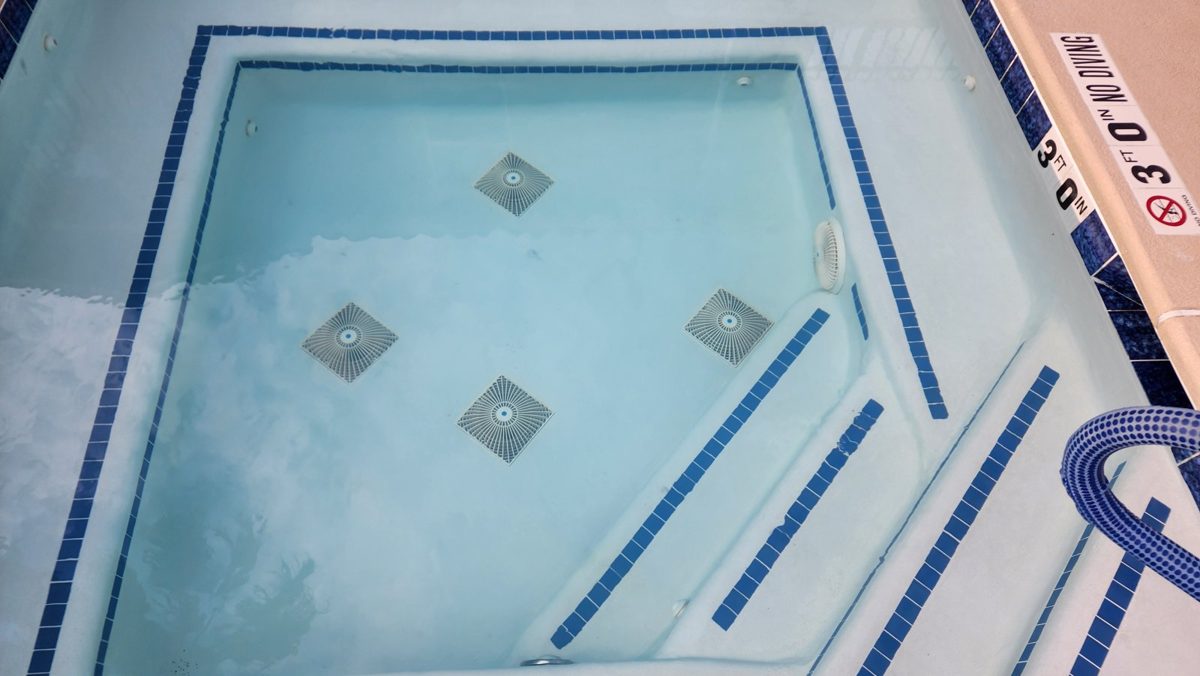
Fresh & Clear job
Commercial spa, finished
Pro tip
The start-up matters as much as the plaster. Brushing twice a day for 28 days removes plaster dust before it can scratch or stain the new surface. Our hard water guide explains how to keep the new finish free of calcium scale after that.
Choosing a finish
We install NPT finishes, from classic plaster to quartz, pebble and polished surfaces. See the full range on our pool replastering page. The finish color changes the color of your water, from bright Caribbean blue to deep lagoon. This short video from NPT shows how:
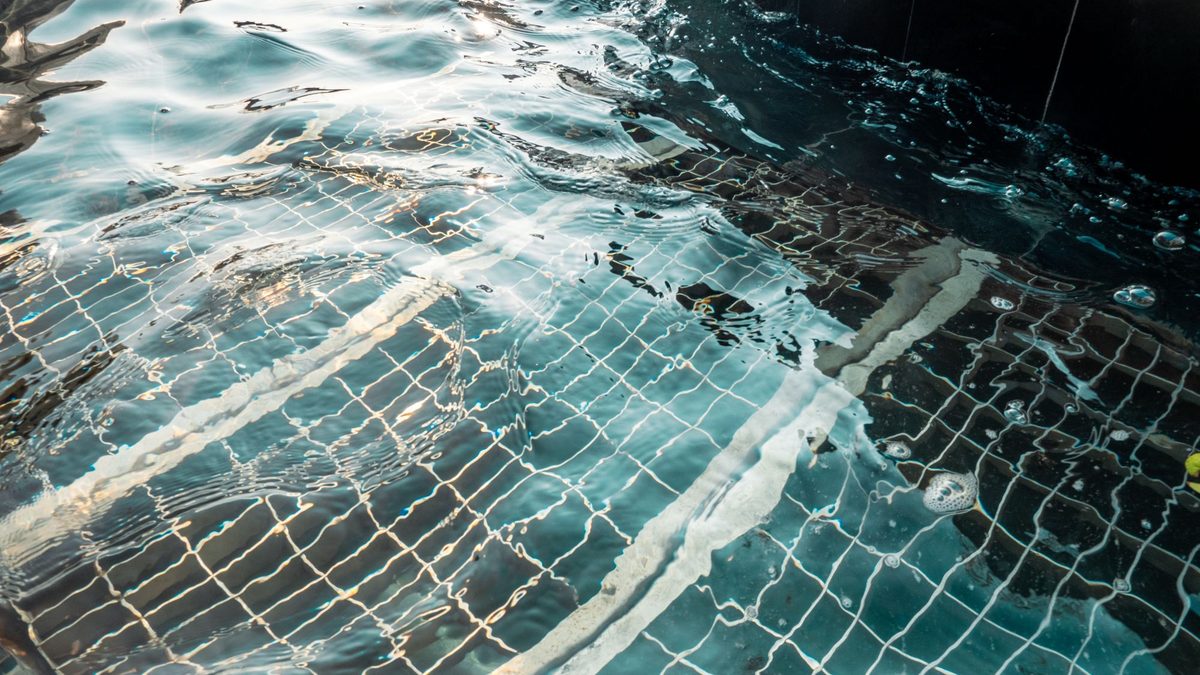
Watch: how pool finishes change water colorVideo by NPT
Frequently asked questions
Why is winter better for replastering in Las Vegas?
Cooler, less extreme weather lets fresh plaster cure more evenly, and the 28-day start-up is easier when you’re not swimming. Planning ahead can leave time for the work and start-up before swim season; we confirm the schedule after inspecting the pool.
How long does a pool replaster take?
Project time depends on surface preparation, tile work, repairs, finish choice and crew schedule. We discuss those details after inspection and allow for the finish’s required start-up period.
Can I use my pool heater after a replaster?
Not right away. The start-up procedure says not to use a pool heater until all the plaster dust is gone, which is usually between day 4 and day 10.
Where does the pool water go when you drain it?
In Clark County, pool water must go into the sanitary sewer clean-out at a slow rate, never into the street or a storm drain. We handle draining the right way.
What finishes do you offer?
We install NPT finishes, from classic plaster to quartz, pebble and polished finishes, in many colors. We’ll show you samples and how each color looks under water.